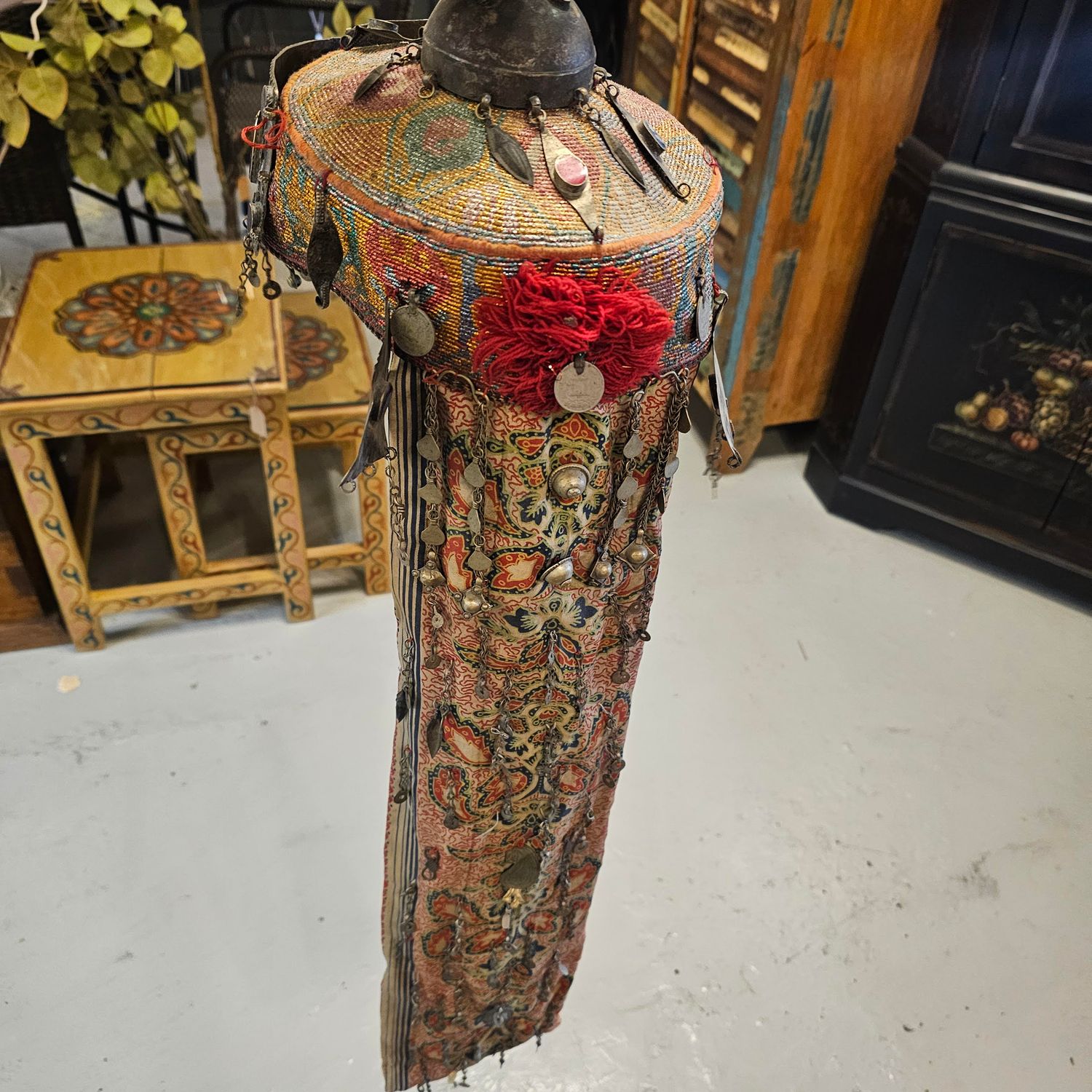
This item is a traditional Turkmen ceremonial bride's headdress (often referred to as an egme, topbi, or saukele variation depending on the specific tribe). This style is native to Central Asia—primarily regions spanning Turkmenistan, Uzbekistan, and Afghanistan—and was crafted by tribal groups such as the Tekke, Yomut, or Ersari peoples during the late 19th to 20th centuries.
Key Characteristics & Symbolism
Function: These tall, ornate hats were worn by elite young women as the ultimate statement piece in a traditional wedding ensemble. They symbolized wealth, social status, and a transition into adulthood.
Metalwork & Amulets: The top features a dome-like metal skullcap decorated with dangling silver-plated or brass pendants (sankuli) and teardrop charms. Central Asian nomadic cultures believed these jingling pieces ward off negative energy and the "evil eye".
Stones: It is inlaid with lapis lazuli (the blue stones) and glass or carnelian cabochons (the red stones), which are deeply tied to regional jewelry-making traditions for protection and health.
Textiles & Chains: The long fabric drape extending downward is decorated with meticulous embroidery, red silk tassels, stamped metal plaques, and heavy rows of silver chains or old coins.