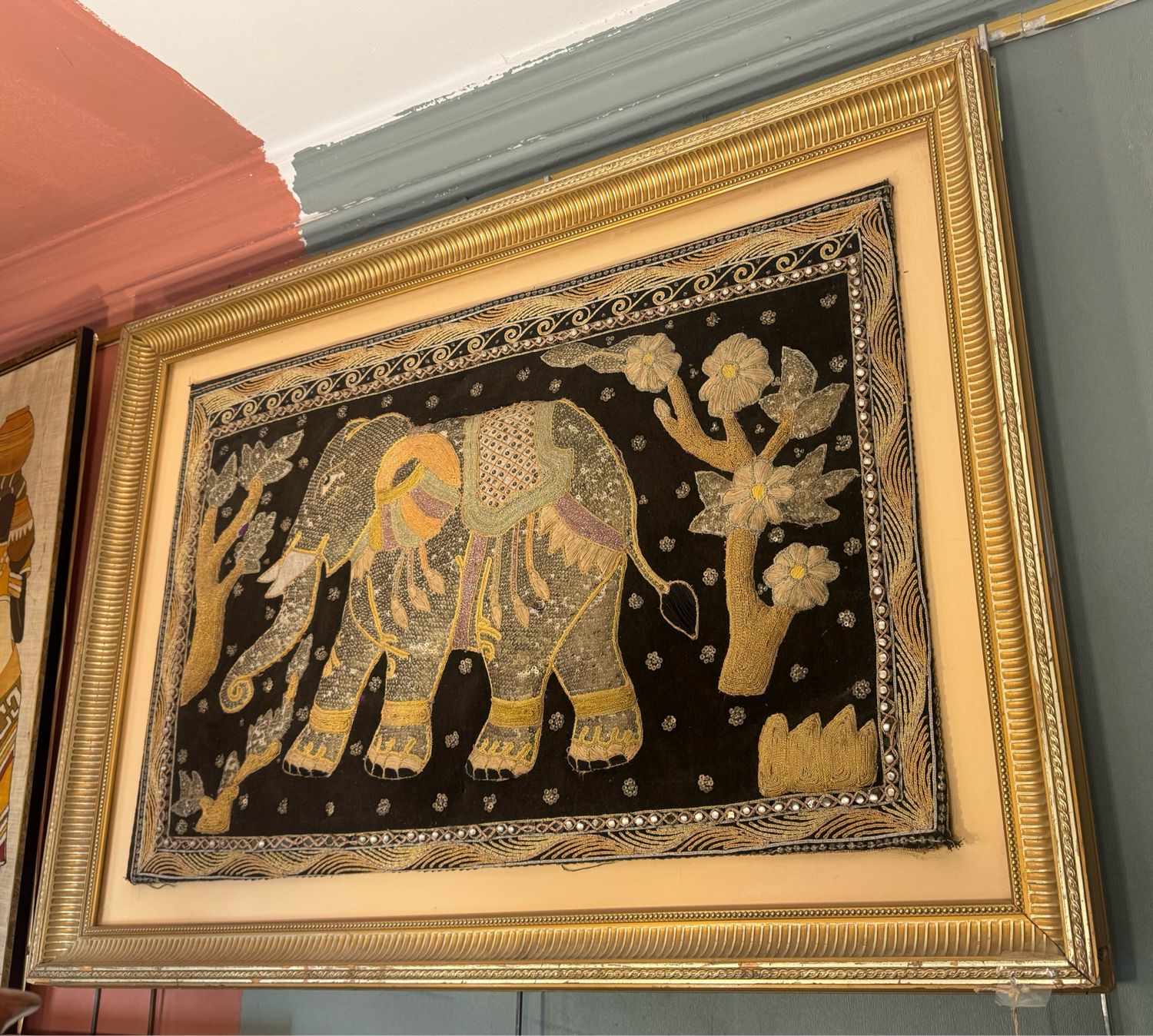
This framed piece is a vintage Burmese Kalaga tapestry, a traditional form of heavily embroidered textile art native to Myanmar (Burma).
Key Characteristics of Kalaga Tapestries
The Craftsmanship: The name Kalaga translates roughly to "curtain" in Burmese, but the technique itself is called shwe gyi do ("gold thread embroidery"). It involves applying intricate hand-embroidery, quilting, and applique to a heavy background layer, which is traditionally black or red velvet.
Dimensional Details: The central elephant figure uses a stuffed relief method (stumpwork) to raise it off the fabric and create a distinct three-dimensional effect.
Embellishments: The detailed patterns across the elephant's body, the stylized surrounding trees, and the ornate border lines are created by densely sewing rows of metallic sequins, glass beads, and metallic threads.
Symbolism: The elephant is a highly sacred animal in Southeast Asian culture, frequently depicted in these tapestries as a symbol of mental strength, royal power, good fortune, and fertility.
These works became highly popular as statement wall decor during the late 20th century. This specific piece has been professionally mounted with an elegant inner matting border inside a ornate gold frame to preserve the delicate textile and beadwork.